
Alien 3 story
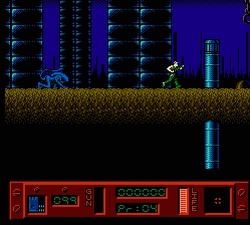
The 8-bit story of Alien 3 was born from that cold theater whisper where David Fincher stretched nerves to piano wire. Built in Britain by Probe and shipped by LJN, it did the bold thing: it flipped a reserved survival film into a tense, fast run-and-gun that never betrays Alien’s spirit—it just translates it to the D-pad. That’s how Alien 3—some called it Alien 3, some Alien III, and in a few places you’d even see stern Cyrillic “Чужой III” on the sticker—jumped off the green-arc poster and into a cartridge you’d borrow from a buddy “for the weekend” and really, really didn’t want to return.
Early ’90s air buzzed with the same charge everywhere: we wanted to “play the movie,” minus the shackles that stop you from jumping and shooting. The film has its truth—prison planet, clanking chains, Ripley and the creature in the maze. On the NES—on Dendy clones, too—it had another truth: bleak corridors, floor-to-floor sprints, timed rescues with a drip-feed timer ticking down while something unseen rustles behind you. Levels born on graph paper were pressed around one mantra: tension through action. Don’t wait—move. No escort cutscenes, no filler—just routes, risk, and that ever-present clock. It worked. People loved Alien 3 not for literal plot beats, but for the mood—the feeling you’re holding the line alone against a whole hive.
From screen to cartridge
Licenses are fickle: they promise recognition, but demand care. The Alien 3 team clung to the right icons—Ripley, xenomorphs, lifts, steel gantries—and built missions that play like tight little scenes: find survivors, cut off the bugs’ approach, dash back to the landing zone—in a single breath. Sound seals it: the Alien 3 NES soundtrack sighs like cold air in the vents. It doesn’t copy the film’s score, but it carries the same dread and low, industrial hum. Fire it up and you’re instantly on Fiorina “Fury” 161, that bleak industrial monastery where every footfall feels like it’s along a rusty edge. Doors hiss, alarms ping, and the mix keeps you braced for the next corner.
The game spread unevenly around the globe. In the West, curiosity did the heavy lifting—“it’s the movie game.” In our neck of the woods it rode the Dendy wave: markets and rental shops, gaudy box art, carts with crooked Alien III font, handwritten “Alien 3 (Dendy)” on masking tape. Slipped into clear plastic cases, mummified in tape, traded “for one week—be careful.” That’s how the legends spread too: “Is there a secret ending?”, “How do you clear the last mission with the timer practically at zero?”, “Where are the extra medkits hidden in Alien 3?” Those questions hopped from yard to yard before “walkthrough” became a search term.
Why it stuck
Loving Alien 3 isn’t about platform wars or tech specs—it’s about character. The game is dour, decisive, and fair. No hand-holding: leave a survivor and you’ve failed the whole crew; hesitate and you’re restarting. That’s true to Alien—no room for weakness. Which is why it hits so hard when Ripley, under your thumbs, pries the last body from a cocoon and dives into the lift with seconds left. That’s the juice that keeps people coming back: carving tighter lines, learning the map, and chasing the optimal route like a good speedrun—catch your breath here, risk it there, and blind-jump to steal half a second. Hitboxes feel honest, jump arcs are learnable, and the timer is an unblinking judge.
And the atmosphere. It’s all pixels, sure, but the palette paints exactly what it should: metallic ochre, green techno-gloom, rare pulses of warning red. When a door clicks in the silence, your shoulders know a facehugger’s scuttling behind the wall. You can’t put that in a dry summary—you live it. So even now, when someone drops, “Remember Alien 3 on the NES?”, you get a chain of smiles: “Oh yeah, I was stuck on that stage where you have to save everyone before the timer eats you.” And up bubble the backyard tips from pre-internet days: “Go right first, then down the ladder to the terminal—it’s the shorter route,” a folk-made “Alien 3 walkthrough” before FAQs were a click away.
How it reached us
Across the post-Soviet scene, Alien 3 rolled in like a quiet, steady tide. It arrived with a pack of movie tie-ins, but this cart lingered in kids’ collections longer. Maybe because it felt grown-up without glitter—no popcorn disaster, just steel, echo, and results. In the neighborhood club it ran on a TV with washed-out colors and still looked right—like Fury 161 was always a little black-and-white. Pirate batches kept coming, and on one and the same stall you’d spot “Alien 3,” “Alien III,” and even “Чужой III”—the same board wearing different masks. It slipped into our vocabulary: someone said “Alien 3 on Dendy,” another “Alien 3 from the movie,” and someone else simply “Ripley vs. the xenomorphs.”
Looking back, it’s clear why it outlived its moment. Alien 3 didn’t lean on novelty—it leaned on a rarer thing in games: internal rhythm. That click when you sync with the loop—the stride, the breath, the flow state. Which is why the “Alien 3 ending” isn’t remembered as a string of frames, but as a measured run where you squeezed everything out of yourself and the clock. It ties the game to the film better than any plot copy: in both, wins don’t arrive under spotlights—they’re ground out at the last heartbeat, right when you think it’s over. Just you, the steel silence, and the ventilation whispering at your back.